Experiencing the Church in Kenya has been such a joy.
The name “Catholic” comes from the Greek
katholikos, meaning “universal.”
Seeing the Church work in Kenya has really
demonstrated its universality, its
Catholic-ness.
It is at the same time so foreign and yet so familiar.
Catholicism is relatively new to Africa, but
growing rapidly.
It was Western
missionaries who brought the faith to the continent.
Yet in a twist of irony, Africa’s churches
are full and ours are not.
The Church in
Africa has many priests, and yet Western churches often have nobody to lead
their congregations.
Maybe one day
Africa will have to send missionaries to re-evangelize the West.
 |
| Beautiful sunset in Mutomo. |
Kenyans are an amazingly spiritual people. For being such a small town, Mutomo is filled
with many churches, and you can hear their choirs echoing throughout the town
all through Sunday. At the hospital
people pray before meals, at the start of each shift, before every meeting,
etc. And so many people, in addition to
their Kikamba names, also take Biblical names or names of saints.
 |
| Boy & Girl Scouts |
I recently attended an
event in Nairobi for Sr. Helen Clare, one of our midwives at the hospital.
She was making her final vows as a nun along
with five other sisters.
It was a large
and elaborate event, with hundreds of guests in attendance, a huge feast,
music, and dancing.
It was much like a
wedding, except the brides are marrying God instead of husbands.
It was a beautiful ceremony from start to
finish.
The opening procession was led
by a group of boy and girl scouts marching down the aisle, followed by dozens
of dancing sisters and novices.
When it
came time for the scripture readings, a woman danced in while carrying in the
Bible in a basket atop her head.
The
Africans know how to celebrate Mass.
Faith
and spirituality are exciting for them, and it shows in their practice.
 |
| Sr. Helen Clare during her final profession. |
 |
| Our Lady of Africa Cathedral, Kitui Diocese. |
A couple weeks ago I took a short trip to Kitui with the
European rotary doctors for a two-day getaway during our days off.
Kitui is about two hours from Mutomo and is
the capital town of Kitui county.
Hendrik (the Dutch dentist) and I traveled there by
matatu (the local bus transportation).
It is definitely not the most comfortable way
to travel.
We started the journey with
three of us in the front seat.
Halfway
through, we picked up yet another person.
I assumed he would squeeze into the back of the bus, but was surprised
when I found him sandwiched between the driver and myself in the front
seat!
For about half an hour we all sat
practically turned sideways until the newcomer reached his destination.
In Kitui we met up with the two Swedish
doctors and enjoyed hot showers, a good dinner, and live music.
At the hotel we also ran into another mzungu,
Bram, who is from the Netherlands and is working in Kitui.
On Sunday morning, Hendrick and Bram (both fellow
Catholics) led the way to the cathedral.
It must have been a funny sight to see during the service: Bram with his
Dutch Bible, Hendrik and I sharing an English copy, and everyone around us
reading in Kiswahili, yet all engaged in the same message.
It was beautiful to see the faith transcending
cultural and language lines.
 |
| Hendrik & Bram |


 |
| Stations of the Cross in Kiswahili |
 |
| Crammed in a matatu during the journey to Kitui. |
 |
| Baptism at the hospital. |
Last weekend one our staff members from the hospital’s HIV
clinic had a baptism for his newborn daughter.
This is the second baptism I’ve attended in Kenya. Unlike at home where baptisms are always done
in the church, here the setting is usually much more intimate. Baptisms are often done in the home. This one was done in a classroom at the
hospital with family and friends gathered to watch. I’ve kind of become the unofficial
photographer for events now. I brought
my camera along and was asked to photograph the whole ceremony. So all through the Mass I circled the priest
and the baby, taking as many snaps as I could (I was asked to do the same for
Sr. Clare’s ceremony last month and took almost 2GB of photos!).


We followed the event with a typical Kenyan feast of rice,
chapatti, cabbage, goat stew, and fruit.
I’m really loving the local food here.
Before I ate it because that was all there was and I couldn’t get
Western dishes, but now I find myself craving things like ugali and cabbage and
goat and thinking little of American food (though I still wouldn’t turn down a
bowl of ice cream if it came my way).
 |
| Sunset during an evening jog. |
 |
| Evans, a nurse from medical ward, shopping for his evening dinner. |
 |
| The "shoe store" during market day. |
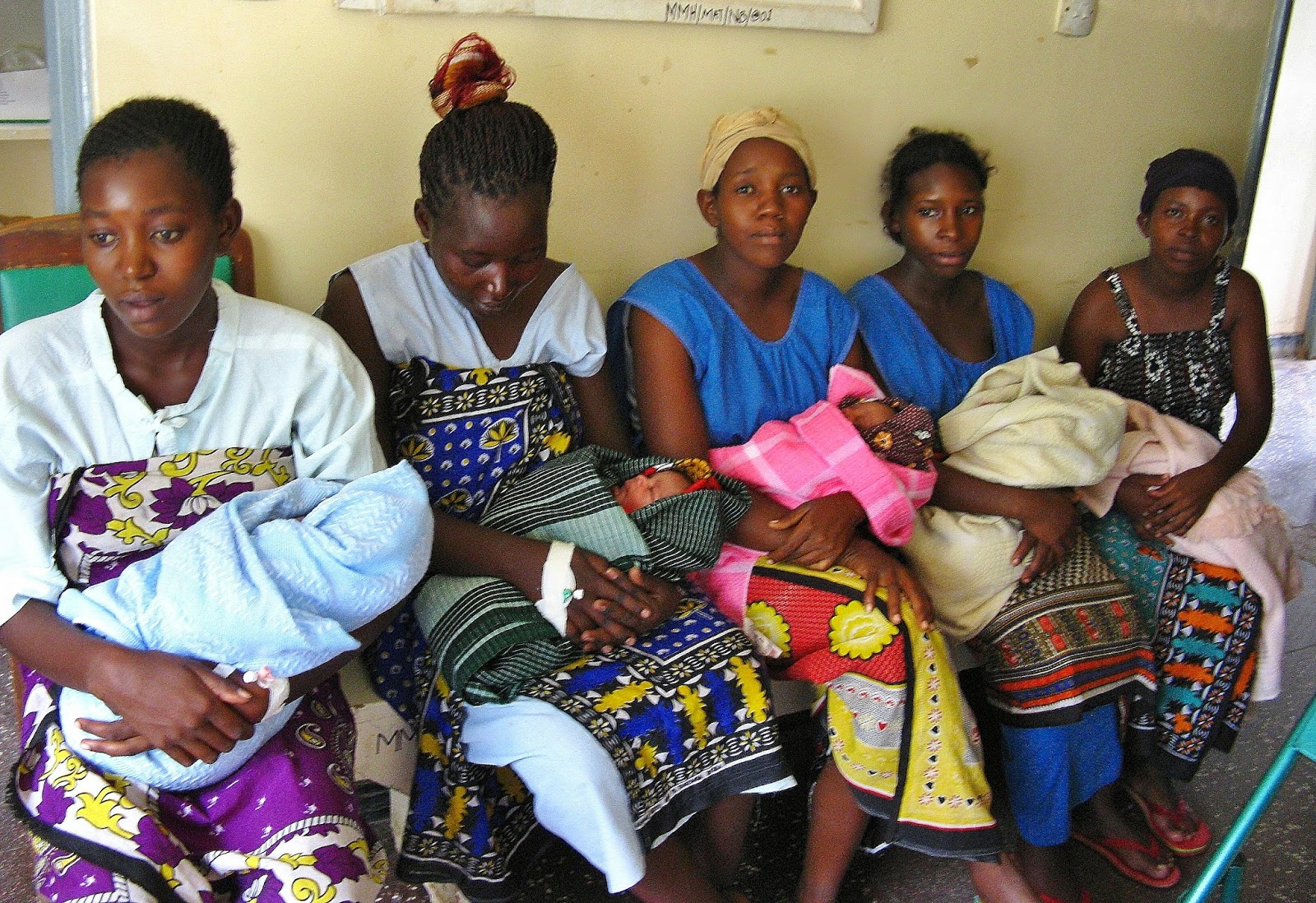 |
| All the mothers after delivery waiting to fill out birth certificates |
I’ve gotten a lot of practice lately with deliveries on
maternity ward. I’ve now done several
(maybe 5?) deliveries on my own. Of
course they have all been cases without complications and I am never without
another nurse nearby who can help if needed, but I’m finally getting the
basics. So when I get back to the U.S.,
if I ever find myself in an emergency where a woman goes into abrupt labor, I
think I’ll be able to manage. One
exciting bit of news for me this last week: one of the mothers named her son
after me. It’s very common here for
mothers to name their babies after the doctors and midwives. I felt very honored and told her Eric
was a very good name. Still, it’s kind
of strange to think that this child will go through life with my name just
because I happened to be at the hospital doing the delivery that day.
 |
| March 17th, the first baby I delivered on my own! |
 |
| March 25th: me with baby Eric and his mother. |
 |
| Baby Eric |
 |
| Doing fine after vacuum delivery and resuscitation. |
We had a delivery yesterday which ended well, but was a bit
of a scare initially. One of the
patients was in labor, but progressing slowly, so the doctors ordered for her
to be augmented with oxytocin. I
assessed the fetal heart rate and it was great.
About 30 minutes later, I couldn’t find the heart rate when I
listened. I asked another nurse on duty
to check, and she confirmed what I had heard.
I called the gynecologists, who rushed to the ward to see her. We sped the patient down the corridor for a
quick ultrasound which showed the fetal heard rate dropping, then sped back up
to the delivery room where the doctors did a quick episiotomy and vacuum
extraction. The baby had a low initial
Apgar of 6. We suctioned out the airway
and manually ventilated for a few minutes, and were finally rewarded with the
sweet sound of screaming and crying. “Don’t
be such a baby!” I always tell them when they cry. Mother and baby were both fine by the end of
the shift.
 |
| Morning rounds with Dr. Amolo, the chief medical officer at the hospital. |
We seem to be resuscitating a lot of babies lately. Earlier this week we delivered a baby by caesarian
section and ended up having to intubate, ventilate, and do compressions for
almost an hour. He spent the night on
oxygen and under close supervision. He’s
done great all this week, gaining a good deal of weight and breathing without
any difficulty. This morning, four days
after delivery, he was discharged home with his mother.
 |
| Thank God for eye goggles! Note also the bloody hands! |
In a recent care package from home, I received a pair of
protective eye goggles. They are such a
godsend, as I sometimes find myself speckled with blood and amniotic fluid and
always worry about getting the stuff in my face. Thank
you Mom and Dad! Don’t need any of
that amniotic soup in my eyes.
 |
| Mutomo after a heavy rain. |
Every Thursday, the hospital has continuing education
classes put on by staff members at the hospital. This week I volunteered to present another
lecture, this time about palliative care.
Palliative care is a specialty area of healthcare that focuses on
quality of life and controlling symptoms of a disease, rather than curing the
disease itself. Clinicians and nurses at
the hospital often use the term “palliative care,” but many don’t necessarily
understand what it means or how to implement it. Coming from an oncology unit back home, I had
a lot of experience dealing with palliative care, so I decided to give a class
on the subject. People seemed generally
interested in the subject (even though it may not look that way in the photo).
 |
| Assembled for my morning lecture... don't they all look so excited? |
 |
| This girl kept up for a good while during a morning run. |
Now that I’ve been here for a good amount of time, I often
find myself forgetting that I’m different from everyone else. Not that I think of myself as African; I just
forget that I look different. I used to
be very alert to the stares every time I stepped into town or went to
church. I was always painfully aware of
my foreign appearance and how alien my white skin must look. Now when I’m walking around town, I
occasionally notice people looking at me and I remember with surprise, “Oh
yeah, I’m white!” The children never get
tired of staring and waving at me. You
would think I was walking through town dressed as Santa Clause the way they all
run up to me. I like to go running
through town a lot, but I hardly ever have a run without a group of kids
chasing after me. Usually they yell,
“Mzungu, mzungu!” although the latest one I’ve been hearing is, “British! British!”
Their standard greeting is always, “How are you?” I think this is the only English phrase many
of them know, because when I answer, “Fine, how are you?” I often just get
confused stares.
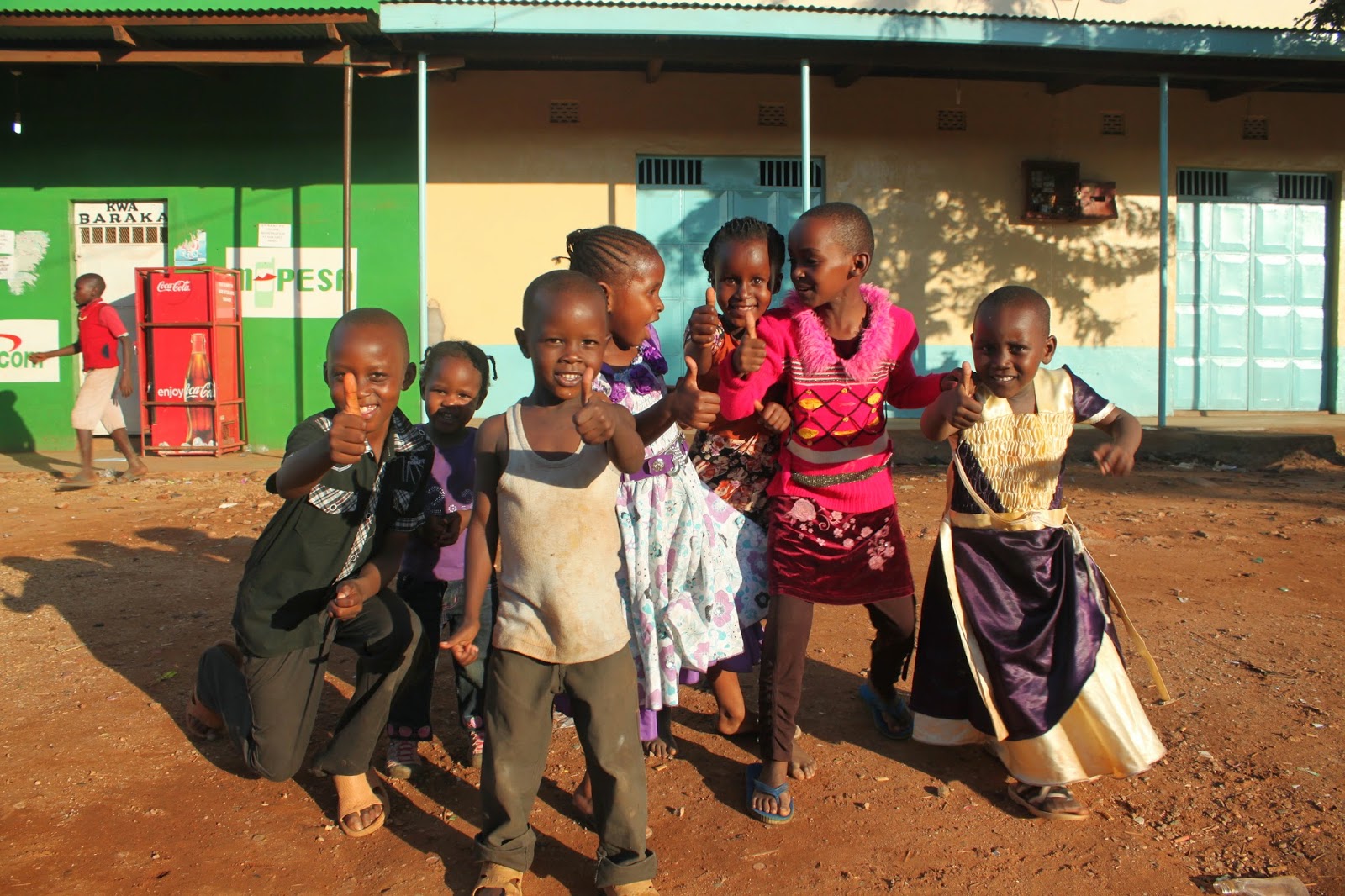 |
| This mob of kids chased me down and asked to have their picture taken. |
 |
| We were joined by these students during our morning walk. |
 |
| Foggy sunrise over Mutomo. |


